 how-to
Commercial Grade Security Fencing Installation
Table of Contents
- What Is Commercial Grade Security Fencing
- Durable Fencing Materials for Extreme Weather
- Permitting and Zoning Regulations
- Security Fence Installation Best Practices
- Commercial Fence Installation Cost and Total Cost of Ownership
- Integration with Surveillance and Access Control
- Maintenance and Longevity
- Frequently Asked Questions
Last Updated: September 27, 2026
What Is Commercial Grade Security Fencing
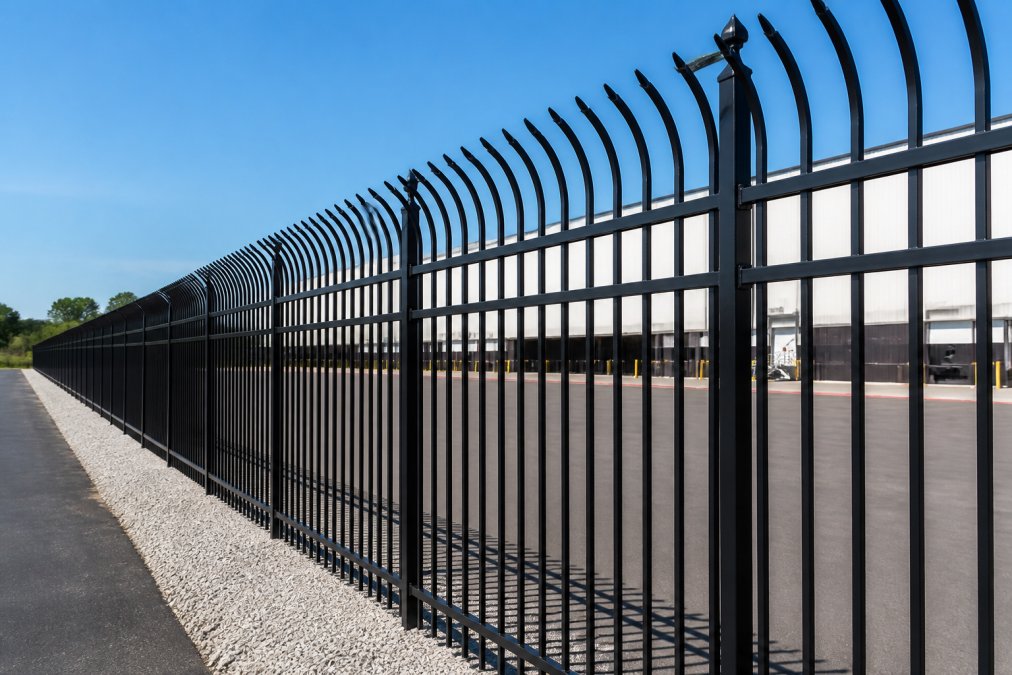
Commercial grade security fencing is a heavy-duty barrier system engineered to protect industrial, commercial, and multi-family properties from unauthorized access and intrusion. Unlike residential fencing designed primarily for aesthetics, commercial grade security fencing prioritizes structural integrity, durability, and perimeter defense with materials and installation methods built to withstand extreme weather and deliberate tampering.
The core purpose is to establish a secure perimeter that deters intrusion, controls access, and integrates with broader security infrastructure.
Durable Fencing Materials for Extreme Weather
Galvanized Steel and Powder Coating
Galvanized steel remains the industry standard for commercial grade security fencing because it resists corrosion in harsh climates. The galvanization process coats steel with zinc, creating a protective barrier against rust and oxidation, essential in high-humidity environments where unprotected steel fails quickly.
Powder coating adds a second layer of protection, bonding tightly to the galvanized base and providing superior weather resistance compared to paint alone.
Welded Wire Mesh and Chain Link Options
Welded wire mesh offers superior rigidity and anti-climb characteristics compared to standard chain link. Smaller openings (typically 1-inch or smaller) prevent tools from being passed through and deter climbing attempts.
Industrial-grade chain link uses heavier gauge wire and denser weave patterns than residential versions, serving commercial security needs for 15-20 years with proper installation.
Welded mesh provides superior anti-climb performance but costs more; chain link offers flexibility and easier maintenance for moderate security needs.
Anti-Climb and Corrosion-Resistant Designs
Anti-climb designs incorporate angled top rails, inward-facing barbed wire, or specialized mesh patterns that eliminate handholds and footholds.
Corrosion-resistant design includes proper concrete footings that keep posts elevated above ground moisture, welded connections, and drainage holes to prevent water pooling.
Permitting and Zoning Regulations
Before installing commercial grade security fencing, verify local permitting requirements and zoning restrictions, particularly for height limitations or barbed wire elements.
Height restrictions typically limit commercial fencing to 6-8 feet, though industrial zones may allow taller barriers. Anti-climb features and barbed wire require additional permits and engineering documentation.
Contact your local building department early; permitting timelines can extend 2-4 weeks depending on local workload.
Security Fence Installation Best Practices
Site Assessment and Property Line Verification
A professional site assessment identifies security vulnerabilities, determines optimal fence placement, and locates surveillance integration points.
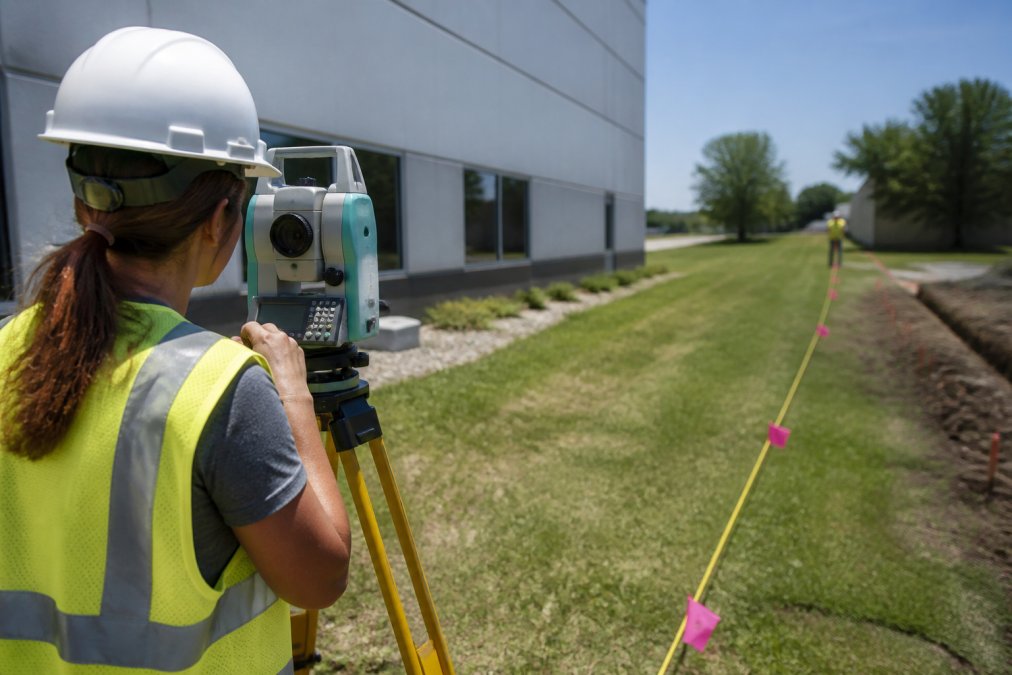
Property line verification prevents disputes and ensures your fence sits entirely on your property. Professional surveyors establish exact boundaries; this is not optional.
Concrete Footings and Post Installation: Engineering the Foundation
Concrete footings determine fence longevity. Posts must be set below the frost line to prevent frost heave, which pushes posts upward and creates structural gaps.
Professional installation requires digging post holes 2-3 feet deep below the frost line. Concrete must achieve 3,000 PSI minimum strength and cure for 7 days before load is applied. Posts must be set perfectly vertical.
Post spacing directly affects security and structural performance. Standard installations use 6-8 foot spacing; high-security applications use 4-6 foot spacing to reduce panel flex.
Concrete footings should extend 6-12 inches above grade to prevent water pooling against the post base, a primary cause of corrosion failure.
Installation Timeline and Quality Standards
A typical commercial grade security fencing project takes 2-4 weeks from permit approval to completion. Rushing any phase compromises longevity and security performance.
Site preparation typically requires 2-3 days for properties under 500 linear feet, with post holes dug to verified depth and cleared of obstacles.
Concrete curing is non-negotiable. Most concrete reaches 70% strength within 7 days and full strength within 28 days. Installing panels before concrete fully cures allows posts to shift under load, creating misalignment and structural weakness.
Quality standards require inspections at key phases: post hole depth verification before concrete is poured, concrete curing confirmation before panel attachment, and final alignment checks after installation. Third-party inspections are common for high-security installations, providing documentation that the fence meets engineered specifications.
Commercial Fence Installation Cost and Total Cost of Ownership
Commercial grade security fencing installation costs vary based on material choice, site conditions, and security requirements. Galvanized steel typically costs $25-$55 per linear foot installed, while industrial-grade chain link ranges from $15-$35 per linear foot. These upfront costs are only the beginning of total cost of ownership (TCO), which accounts for maintenance, repairs, replacement cycles, and insurance benefits.
Breaking Down Total Cost of Ownership
TCO extends across the fence's full lifespan, typically 15-30 years depending on material and installation quality. A fence installed with proper concrete footings requires minimal maintenance and achieves the upper end of this range; shortcuts cut the lifespan in half.
Initial Installation Cost: This is the most visible expense.
Material Choice and Long-Term Value
Galvanized steel costs more upfront but delivers superior longevity and lower maintenance. A galvanized steel fence installed correctly costs $25-$55 per linear foot but lasts 25-30 years with minimal maintenance. The cost per year of service is approximately $0.83-$2.20 per linear foot annually.
TCO Comparison Framework
For a 500-linear-foot commercial property, here's how TCO breaks down over 20 years:
Galvanized Steel Scenario:
- Initial installation: $17,500 (at $35/linear foot)
- Annual maintenance: $1,000/year × 20 years = $20,000
- Emergency repairs (minimal): $2,000
- Insurance savings: $10,000/year × 20 years = $200,000 (avoided cost)
- Total cost: $39,500 | Total avoided losses: $200,000+
Chain Link Scenario:
- Initial installation: $10,000 (at $20/linear foot)
- Annual maintenance: $1,200/year × 20 years = $24,000
- Panel replacement at year 15: $8,000
- Emergency repairs (moderate): $5,000
- Insurance savings: $5,000/year × 20 years = $100,000 (avoided cost)
- Total cost: $47,000 | Total avoided losses: $100,000+
Integration with Surveillance and Access Control
Modern commercial security integrates fencing with surveillance systems and access control technology. A well-designed perimeter fence works with cameras, motion sensors, and gate automation to create layered security.
Maintenance and Longevity
Commercial grade security fencing requires basic maintenance to achieve its full lifespan. Annual inspections identify loose fasteners, corrosion spots, or damage before it spreads. Cleaning removes debris and salt spray that accelerates corrosion.
| Maintenance Task | Frequency | Impact |
|---|---|---|
| Visual inspection | Quarterly | Catches damage early |
| Debris removal | Seasonally | Prevents water pooling |
| Fastener tightening | Annually | Maintains structural integrity |
| Corrosion spot treatment | As needed | Prevents rust spread |
| Professional assessment | Every 5 years | Identifies hidden issues |
Frequently Asked Questions
What is considered commercial grade fencing?
Commercial grade security fencing meets industrial standards for strength, durability, and security. It uses heavy-duty materials like galvanized steel, welded wire mesh, or reinforced chain link with anti-climb features and structural integrity designed for perimeter defense. These systems withstand extreme weather, resist vandalism, and maintain their function for years with proper maintenance. The materials and installation methods exceed residential standards to provide reliable protection for commercial compounds, warehouses, and multi-family properties.
How deep should commercial fence posts be set for proper security?
Commercial security fence posts should be set in concrete footings at least 30 inches deep for standard installations, with deeper footings required for taller fences or high-wind areas. The concrete should extend 6-8 inches above ground level to prevent water pooling and corrosion. Posts are typically spaced 6-8 feet apart for chain link or welded wire mesh systems. Proper post installation is critical for structural integrity and prevents shifting or leaning over time, especially in areas with freeze-thaw cycles or heavy soil movement.
What materials are best for security fencing in extreme weather conditions?
Galvanized steel and powder-coated metal offer superior corrosion resistance and durability in harsh climates. Welded wire mesh provides anti-climb protection while resisting rust, and reinforced chain link with vinyl coating handles temperature swings without cracking or warping. Avoid wood or untreated materials that deteriorate rapidly. The best choice depends on your security needs, budget, and exposure to wind, humidity, and temperature extremes. Professional site assessment ensures material selection matches your property's specific environmental challenges.
Do I need a permit for commercial security fence installation?
Yes, most jurisdictions require permits for commercial security fence installation. Permit requirements vary by location and typically cover fence height, setback from property lines, materials, and design. Local zoning regulations may restrict fence types in certain areas or require HOA approval for multi-family properties. Permitting timelines range from 1-4 weeks depending on complexity and local review processes. Working with an experienced provider ensures compliance with all local codes and prevents costly rework or removal orders.