 blog
blog
Weather Resistant Fencing for Multi-Family Properties
Table of Contents
- Why Multi-Family Properties Need Weather Resistant Fencing
- Material Comparison: Aluminum vs. Steel vs. Composite
- Low Maintenance Fencing for Apartments: What Property Managers Should Know
- Wind Resistant Fence Design: Engineering for Storm Survival
- Fencing Installation for Multi-Family Properties: Key Considerations
- Lifecycle Cost Analysis: The Long-Term Value of Commercial-Grade Fencing
- Conclusion
- Frequently Asked Questions
Last Updated: September 21, 2026
Why Multi-Family Properties Need Weather Resistant Fencing
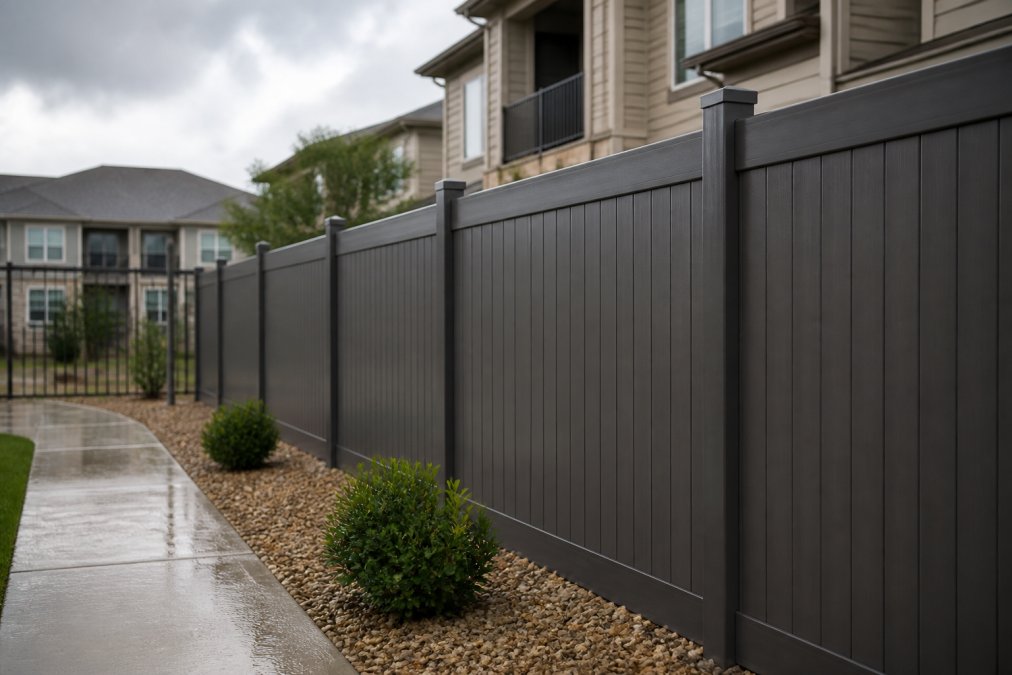
Multi-family properties face a harsher reality than single-family homes: one fence line has to survive decades of sun, storms, and daily wear while serving dozens of residents. That is why weather resistant fencing for multi-family properties has become a core budget line for property managers rather than an afterthought. At Wolverine Land Services L.L.C., we build fencing engineered to withstand tough Texas weather, and the difference between a fence that lasts and one that fails usually comes down to material choice and installation quality.
Material Comparison: Aluminum vs. Steel vs. Composite
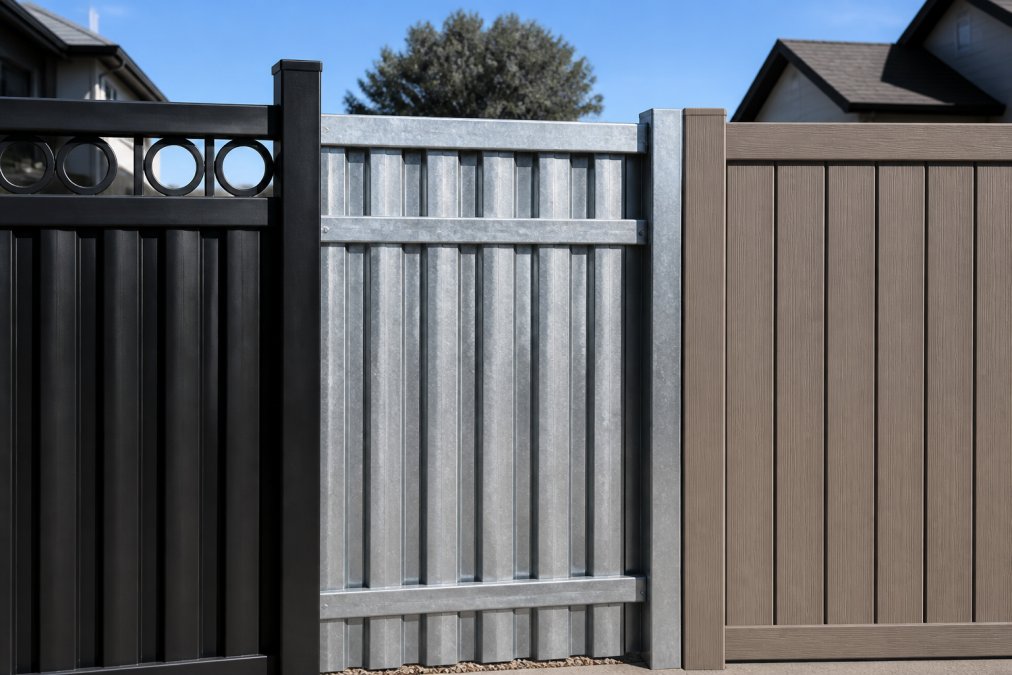
Aluminum, steel, and composite each solve a different problem, and the right pick depends on your budget, climate exposure, and aesthetic goals. Aluminum resists rust and stays light; steel delivers maximum strength; composite mimics wood without the upkeep. Here is how they stack up.
| Material | Corrosion Resistance | Maintenance | Best For |
|---|---|---|---|
| Powder-coated aluminum | Excellent, rust-proof | Low, occasional rinse | Coastal and humid areas |
| Galvanized steel | Good, needs coating | Moderate, inspect coating | High-security perimeters |
| Composite | Varies by core | Low, no painting | Wood-look aesthetics |
Corrosion and Rust Resistance
Aluminum never rusts, which makes it the default for humid climates. Powder-coated finishes add a moisture barrier that keeps the metal stable for years. Galvanized steel resists rust through its zinc coating, but any scratch exposes bare metal, so touch-ups matter. Composite resists rot entirely, though cheaper cores can absorb water at cut edges.
UV Damage and Thermal Expansion
UV-stable finishes keep color from fading, and this is where cheap fencing fails fastest. Metal expands and contracts with heat, so panels need room to move. Composite expands more than metal, which is why installation hardware and spacing matter as much as the material itself.
Low Maintenance Fencing for Apartments: What Property Managers Should Know
Low maintenance fencing for apartments is any system that avoids painting, sealing, and frequent board replacement. Metal and composite options top that list because they resist warping, cracking, and fading without annual treatment. For busy managers, fewer work orders matter more than a lower sticker price.
Wind Resistant Fence Design: Engineering for Storm Survival
Wind resistant fence design is about managing airflow and load, not just picking a heavy panel. A solid privacy barrier acts like a sail, so engineers balance panel weight, post spacing, and wind load capacity to keep the fence standing. Structural integrity starts underground with properly set posts.
Key design factors include:
- Post depth and concrete footing sized to local wind load capacity
- Panel spacing or perforation to reduce pressure on the barrier
- Tensile strength of rails and fasteners rated for storm conditions
- Impact resistance tested against debris carried by high winds
Fencing Installation for Multi-Family Properties: Key Considerations
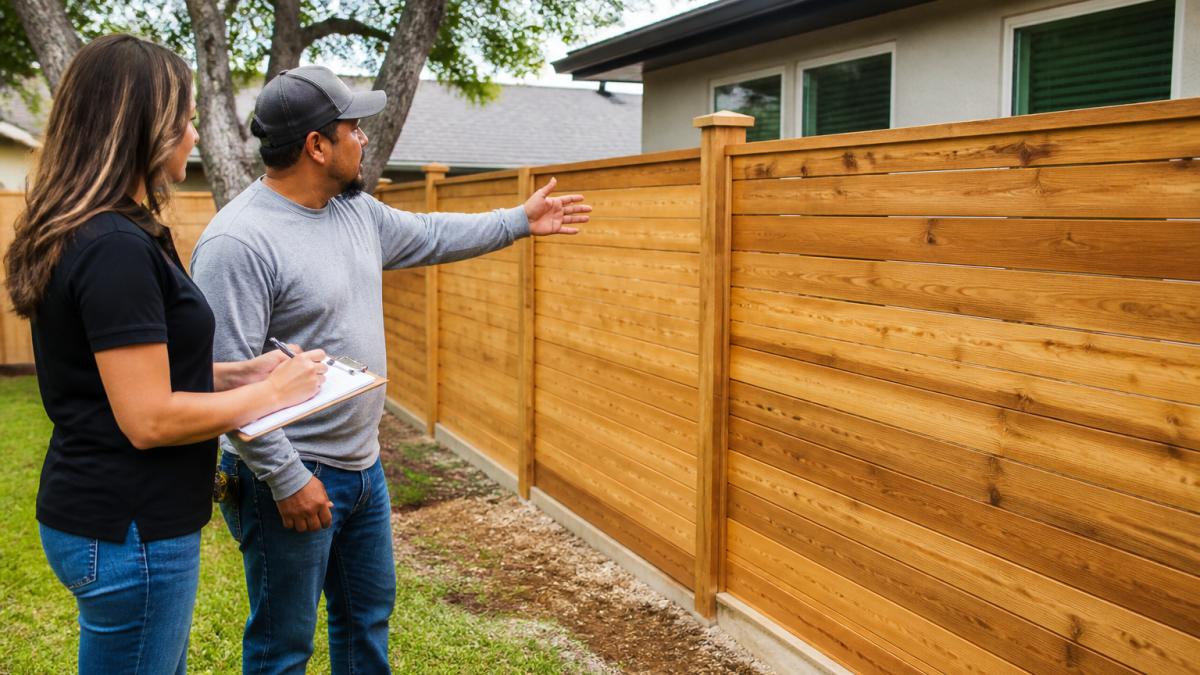
Fencing installation for multi-family properties differs from a single backyard job in scale, access, and compliance. A single run may span hundreds of feet, cross utility easements, and need to satisfy HOA design rules before the first post goes in. Planning the approval path early prevents costly rework.
The Multi-Family Approval Sequence
Most competitors write for a homeowner replacing 40 feet of backyard fence. A multi-family project runs a different gauntlet, and the order matters because each step can invalidate the last:
- Confirm property-line and easement locations with a current survey before any layout. Utility easements frequently run along perimeter lines, and a fence placed inside one can be ordered removed by the utility at the owner's expense.
- Pull the local building permit if the jurisdiction requires one for fences over a set height (commonly 6 feet, but thresholds vary by jurisdiction). Commercial and multi-family parcels are more likely to trigger a permit than a single-family lot.
- Submit to the HOA or architectural review committee with material samples, color chips, and a site plan. Approval can take weeks, so start it in parallel with permitting, not after.
- Verify fire-separation and setback requirements against the adopted building code and local fire code before ordering materials.
- Schedule installation around resident access, trash pickup, and emergency vehicle access lanes.
Regulatory Compliance and Fire Safety Ratings
Fire safety ratings are a compliance issue that many guides skip. Non-combustible materials are often required near buildings and property lines, and standards like ASTM E84 surface burning characteristics and ASTM E136 non-combustibility testing define how materials perform. Metal fencing meets these benchmarks far more easily than wood.
- Adopted building code. Many jurisdictions adopt a model code that restricts combustible fencing within a set distance of a building or along a property line, especially where fire spread between structures is a concern. The exact distance and the definition of "combustible" come from the adopted edition, so confirm with the local authority having jurisdiction (AHJ).
- Local fire code and defensible-space rules. In wildfire-prone areas, some jurisdictions restrict combustible fencing attached to or within a set distance of a structure. Metal and composite systems are typically the compliant path.
- HOA and architectural covenants. These can be stricter than code. A covenant may require a specific height, color, or material even where code would allow more options.
Liability Insurance and Risk Transfer
This is the angle almost no competitor covers, and it is the one property managers care about most. A fence is a physical asset on an insured commercial property, and its condition feeds directly into risk exposure:
- Premises liability. A failing or leaning fence near a walkway, parking area, or playground is a trip-and-fall and injury exposure. Documented maintenance and a commercial-grade system reduce that exposure.
- Attractive nuisance and security. A damaged fence that no longer secures a pool, utility yard, or perimeter can shift liability toward the owner if an incident occurs.
- Insurance underwriting. Carriers increasingly ask about deferred maintenance and the age of perimeter assets during renewal. A fence with a documented service life and a maintenance log is easier to underwrite than one with no records.
- Risk transfer to the installer. A commercial installer should carry general liability and workers' compensation coverage and provide a certificate of insurance before mobilization. Confirm this in writing; it is a standard request on multi-family work.
Access, Phasing, and Resident Disruption
A multi-family install is a logistics project. Plan for:
- Phased replacement so a portion of the perimeter is always secure, rather than tearing out the entire line at once.
- Emergency vehicle access kept clear at all times; never block a fire lane during construction.
- Resident notification with dates, work hours, and a point of contact to reduce complaints and work-order noise.
- Gate and access-control coordination so keypads, call boxes, and card readers are reconnected the same day the new gate goes in.
Lifecycle Cost Analysis: The Long-Term Value of Commercial-Grade Fencing
Lifecycle Cost Analysis, or LCCA, compares the total cost of a fence over its full service life: purchase, installation, maintenance, repairs, and replacement. A cheaper fence that needs replacing twice costs more than a commercial-grade system installed once. This is the argument that wins budget approval, and it is the argument most competitors never actually make.
How to Run the Numbers
The standard approach is to express every cost in present-value terms so a cheap option and an expensive option can be compared on the same footing. The mechanics:
- Set the analysis period. For perimeter fencing, a 20- to 30-year horizon is common because it captures at least one full replacement cycle for wood.
- List upfront costs. Materials, labor, permits, HOA submittals, and any compliance upgrades such as non-combustible panels near a building.
- List recurring costs. Repairs, repainting or resealing, hardware replacement, and the administrative cost of resident work orders.
- List end-of-life costs. Removal, disposal, and replacement at the point the system reaches the end of its service life.
- Discount future costs to present value using the property's cost of capital or a rate your finance team specifies. A dollar spent in year 15 is worth less than a dollar spent today, and LCCA accounts for that.
The Three Cost Buckets, With Realistic Intervals
- Upfront: materials, labor, and compliance upgrades. Metal and composite systems carry a higher sticker price than wood.
- Recurring: wood typically needs repainting or resealing every few years and board replacement after storms; powder-coated aluminum and quality composite generally need only occasional cleaning and hardware inspection. The recurring bucket is where wood loses the comparison, because every repair also carries a labor and disruption cost that never shows up on the material invoice.
- End-of-life: wood often reaches replacement sooner than metal, which means a 25-year horizon can include two wood cycles against one metal cycle.
The pattern most practitioners find is that the cheapest upfront option is rarely the cheapest over a 20-year horizon once labor, disruption, and replacement are included. The exact crossover point depends on local labor rates and climate exposure, so run the numbers for your property rather than assuming.
Sound Attenuation: The Retention Feature Buyers Overlook
Multi-family properties are noisy by design: shared walls, common areas, parking, and mechanical equipment. Fencing material and construction affect how much sound reaches residents, and this is a genuine differentiator most buying guides ignore.
- Mass matters. Heavier, denser panels block more airborne sound than thin or open systems. A solid composite or steel panel outperforms an open picket or chain-link line for noise reduction.
- Gaps defeat performance. Sound travels through the smallest openings. A fence with gaps at the bottom, between panels, or at gate posts will underperform a tightly fitted system of the same material.
- Height and proximity. A taller, closer barrier intercepts more sound before it reaches a unit. Where noise from a road or mechanical yard is the issue, placement and height often matter more than material alone.
- Open systems do not attenuate. Ornamental picket and chain-link fences shed wind well but do almost nothing for noise. If sound is a goal, specify a solid panel and accept the wind-load trade-off, which is why post spacing and footing design have to be engineered for the added sail area.
Conclusion
Specifying fencing for a multi-family property means balancing storm resilience, code compliance, and decades of maintenance costs. Wolverine Land Services L.L.C. helps property managers get that balance right with commercial-grade fencing and landscape construction built for tough Texas weather. As a woman-owned business, we back every project with dependable materials, constant communication from estimate to final walkthrough, and lasting protection for your property.
Frequently Asked Questions
What is the most durable fencing material for high-heat environments?
Powder-coated aluminum and galvanized steel offer the best durability in high heat. They resist warping, cracking, and fading that plague vinyl and wood. Aluminum's powder coating provides a UV-stable finish, while steel's galvanized layer prevents rust. Composite is a strong third option, but verify it meets ASTM standards for thermal expansion. For multi-family properties, these materials maintain structural integrity and appearance through years of intense sun.
How does wind resistance impact multi-family fence selection?
Wind resistance is critical for multi-family properties because a failed fence becomes a safety hazard and costly repair. Look for fences with high wind load capacity, often achieved through reinforced posts, horizontal rails, and perforated or mesh panels that allow air passage. Aluminum and steel systems engineered for commercial use typically outperform standard residential fences. Proper installation with deep-set posts and concrete footings is equally important for storm survival.
Which fencing materials require the least maintenance for property managers?
Aluminum and galvanized steel fencing require the least maintenance. Aluminum never rusts and its powder-coated finish needs only occasional rinsing. Galvanized steel resists corrosion without painting, though it may need touch-ups if scratched. Composite fencing also offers low maintenance but can fade over time. All three avoid the routine staining, sealing, and repair that wood demands, making them ideal for large multi-family properties where upkeep costs add up quickly.
Are there fire-rated fencing options for multi-family complexes?
Yes. Many commercial-grade aluminum and steel fences are classified as non-combustible when tested to ASTM E136, and some systems achieve Class A fire ratings per ASTM E84. These ratings matter for multi-family complexes because building codes often restrict combustible materials near structures. Always request documentation showing the fence meets these ASTM standards before specifying it for a property. Composite and wood fences typically do not meet non-combustible requirements.