 how-to
Landscaping for Expansive Clay Soil: A How-To Guide
Table of Contents
- Understanding Expansive Clay Soil and Its Challenges
- Best Plants for San Antonio Clay Soil
- Improving Drainage in Heavy Clay Soil
- Soil Amendment Techniques for Expansive Clay
- Foundation Protection Landscaping for San Antonio Properties
- Watering and Maintenance Best Practices
- Common Mistakes to Avoid When Landscaping Clay Soil
- Frequently Asked Questions
Last Updated: October 2, 2026
Understanding Expansive Clay Soil and Its Challenges
Landscaping for expansive clay soil presents unique obstacles for homeowners and property managers across the region. This type of soil swells when wet and shrinks when dry, creating stress on foundations, driveways, and any landscaping infrastructure you install. The problem intensifies during Texas's wet seasons and dry spells, which cycle unpredictably throughout the year.
The core issue with expansive clay soil is its mineral composition. Clay particles hold water and release it slowly, causing the ground to shift beneath structures. Unlike sandy or loamy soils that drain quickly and remain stable, clay-heavy soil can move several inches vertically over a season. That movement cracks pavement, warps fencing, and destabilizes plants that expect consistent soil conditions.
Wolverine Land Services L.L.C. works with clay-dominant landscapes in San Antonio and understands how these conditions affect every aspect of outdoor design. The challenges aren't insurmountable, but they demand a different approach than standard landscaping guidance suggests.
The real complication isn't the clay itself, it's that most landscaping practices ignore it. Standard plant recommendations fail because they don't account for the soil's movement. Generic drainage solutions don't work because they don't address the clay's water-holding behavior. And typical foundation protection fails because it doesn't anticipate the expansion and contraction cycle.
Best Plants for San Antonio Clay Soil
The best plants for expansive clay soil are native Texas species and adapted cultivars that tolerate both waterlogging and drought. These plants have root systems that work with clay's movement rather than fighting against it.
Native Texas plants evolved in this exact environment. Texas live oak, cedar elm, and possumhaw naturally thrive in clay-heavy soils. Their deep, flexible root systems adjust to soil expansion without cracking or uprooting. For shrubs, agarito, Texas privet, and flame acanthus handle clay conditions well. These species slow growth during wet periods and accelerate during dry spells, matching the soil's behavior.
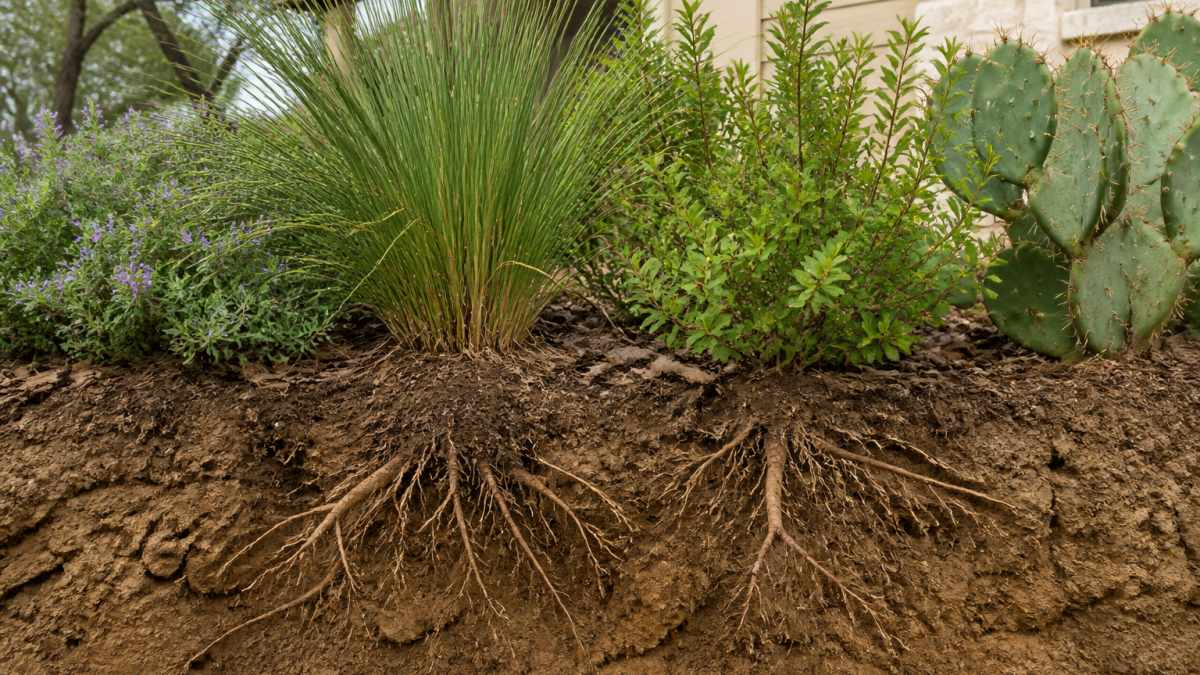
Ornamental grasses like sideoats grama and purple lovegrass add texture while managing clay drainage. Their fibrous root systems stabilize soil without penetrating deeply enough to be damaged by expansion. Perennials such as blackeyed Susan, salvia, and esperanza perform reliably because they're adapted to Texas's moisture swings.
Avoid shallow-rooted plants like crepe myrtles in pure clay areas, their roots struggle with the soil's movement. Skip water-intensive plants that demand consistent moisture; clay's poor drainage creates either flooding or drought stress depending on the season.
Improving Drainage in Heavy Clay Soil
Improving drainage in heavy clay soil requires a two-part strategy: surface management and subsurface modification. Surface-level fixes address water pooling; subsurface work addresses the clay's inherent water retention.
Surface drainage starts with grading. Slope your landscape away from structures at a minimum 2 percent grade (2 feet of drop per 100 feet of distance). This simple slope prevents water from sitting on clay, which triggers expansion. Add swales, shallow, vegetated channels, to direct runoff away from foundation areas and planted beds.
For subsurface improvement, amend the top 12-18 inches of clay with compost and coarse sand. This layer becomes a transition zone that drains faster than pure clay while still supporting root growth. Don't amend deeper than 18 inches; the untreated clay below will still expand, and a thin amended layer won't prevent it.
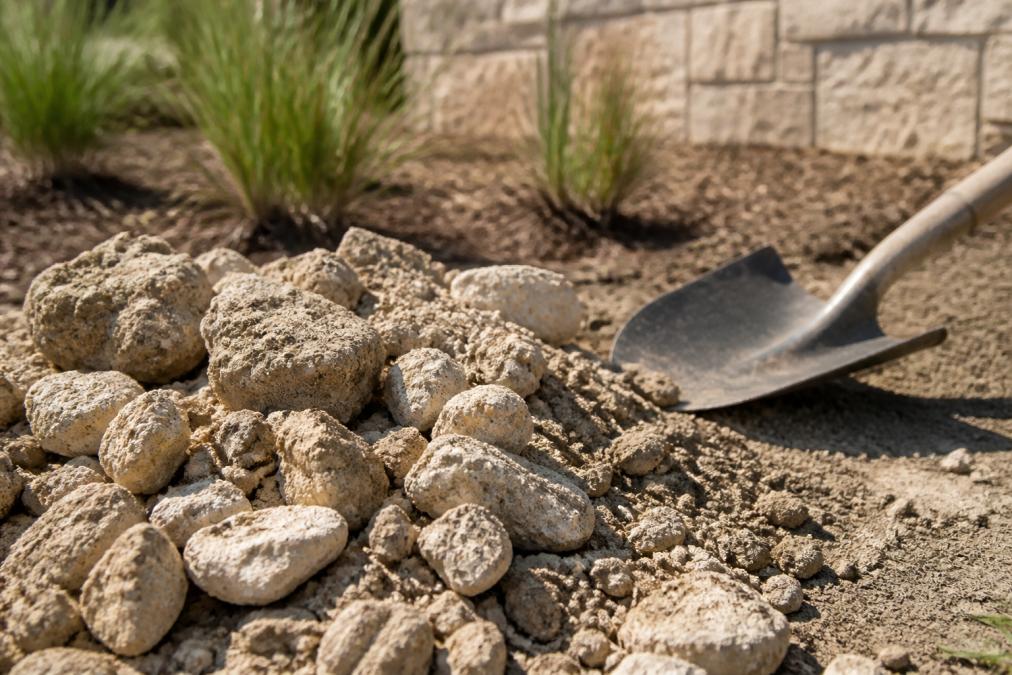
Avoid adding peat moss to clay, it holds moisture and worsens the problem. Coarse sand (not fine sand, which compacts) and aged compost are the right amendments. A 3:1 ratio of clay to amendment works for planting beds.
French drains work in specific situations. Install a perforated pipe 12-18 inches deep, wrapped in landscape fabric and surrounded by gravel, running away from problem areas. This removes water before it saturates the clay. However, French drains are expensive and only solve localized issues; they're not a full-property fix.
Soil Amendment Techniques for Expansive Clay
Soil amendment for expansive clay requires understanding what you're actually trying to achieve. You're not trying to eliminate clay, that's impossible and unnecessary. You're creating a stable planting environment by reducing the soil's movement and improving its drainage.
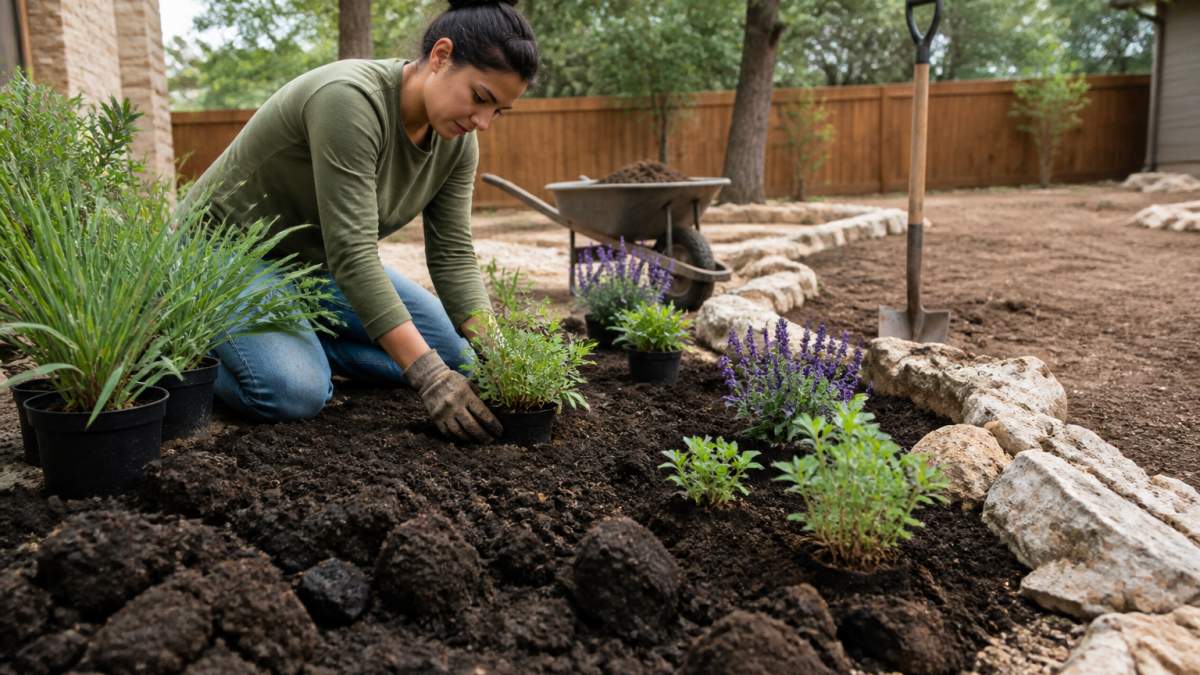
The most effective amendment strategy is layering. Create a planting bed with a 4-6 inch base of compost mixed with coarse sand, then add another 6-8 inches of the same mixture. This 12-14 inch amended zone gives roots a stable environment while the untreated clay below prevents deep settling.
Don't till amendments into existing clay across large areas. Tilling brings up more clay, mixes it with amendments, and creates a uniform "concrete-like" layer that drains worse than untreated clay. Instead, build raised beds or planting mounds on top of existing soil.
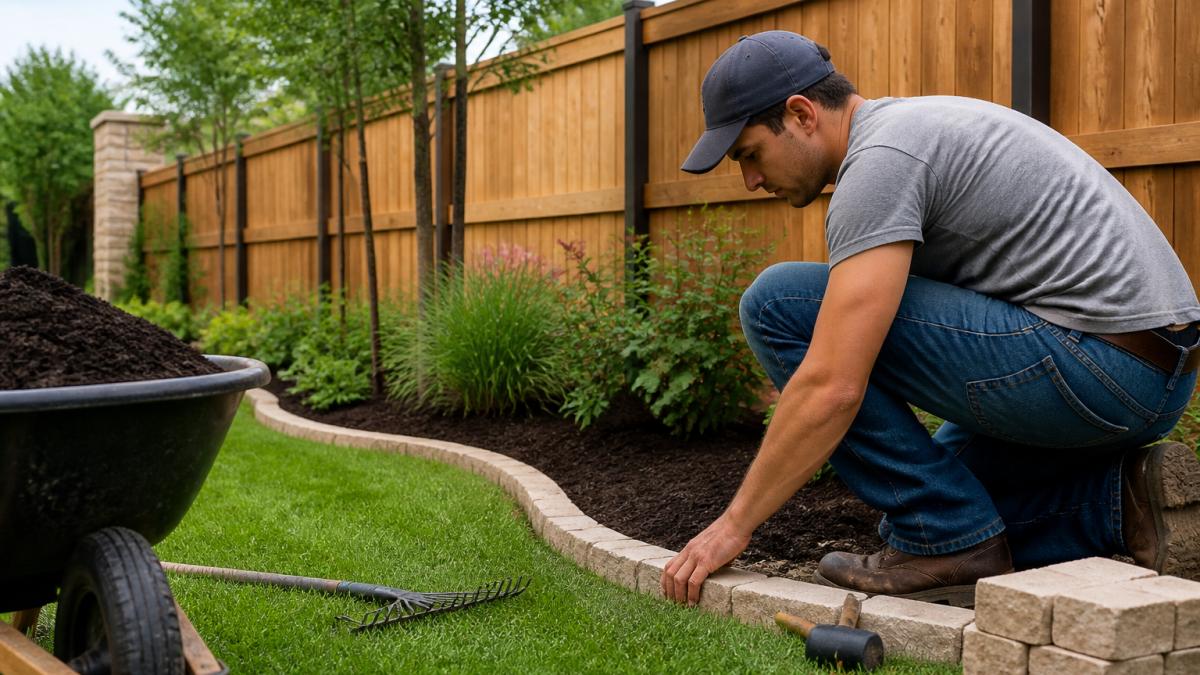
Mulch is critical. A 3-4 inch layer of wood chips or shredded bark reduces temperature fluctuations, which reduces the soil's expansion and contraction rate. Mulch also slows water evaporation, keeping moisture more consistent. This consistency matters more than perfect drainage in clay environments.
For foundation protection landscaping, use a gravel layer instead of mulch. A 4-6 inch layer of pea gravel around the foundation perimeter allows water to drain away while preventing soil contact with the structure. This is more effective than soil amendments for protecting the house itself.
Foundation Protection Landscaping for San Antonio Properties
Foundation protection landscaping serves one purpose: keep soil moisture consistent around your home's perimeter. Expansive clay's expansion and contraction is most damaging to foundations because the force is concentrated and sustained.
Create a moisture barrier around the foundation by removing vegetation within 3-5 feet of the house. This zone should be mulch-free or gravel-covered, sloping away from the structure. This area prevents roots from drawing water out of the soil (which causes shrinkage and foundation settling) and prevents water from pooling against the foundation (which causes expansion and upward pressure).
Beyond that barrier, establish a transition zone with drought-tolerant plants. Texas sage, rosemary, and lantana work well in this area. These plants use some soil moisture but don't demand the consistent watering that would keep soil around the foundation saturated.
Irrigation design matters for foundation protection. Never run sprinklers within 5 feet of the house. If you water landscaping closer than that, you're actively feeding the clay expansion problem. Drip irrigation to distant planting beds is fine; overhead sprinklers near the foundation are a liability.
A perimeter inspection every 2-3 years is recommended. Check for cracks in the foundation, gaps between the house and soil, or signs of settling. These early indicators help you adjust landscaping before serious damage occurs.
Watering and Maintenance Best Practices
Watering clay soil requires a different rhythm than watering other soil types. Clay holds water longer, so you water less frequently but deeper when you do water.
For established plantings, water deeply once or twice per week rather than daily light watering. Deep watering encourages roots to go deeper, where soil is more stable. Light, frequent watering keeps the top layer soggy, which accelerates expansion and promotes shallow, weak roots.
Adjust your schedule by season. During San Antonio's wet season (spring), reduce watering significantly or stop entirely if rainfall exceeds 1 inch per week. During dry periods (summer and fall), increase frequency but maintain deep watering. Winter watering is minimal unless there's a drought break.
Monitor soil moisture before watering. Stick your finger 3 inches into the soil. If it feels moist, wait. If it feels dry, water deeply until water runs off, then stop. This prevents both waterlogging and drought stress.
Maintenance tasks change with clay soil. Aerate planting beds annually by loosening the top 6-8 inches with a garden fork. This breaks up compaction and improves drainage. Don't use a tiller; it creates more problems than it solves.
Refresh mulch annually. As wood chips break down, they improve soil structure but reduce the protective barrier. Add another 1-2 inches of mulch each spring to maintain the 3-4 inch depth.
Common Mistakes to Avoid When Landscaping Clay Soil
The biggest mistake homeowners make when landscaping for expansive clay soil is fighting the clay instead of working with it. They install deep-rooted plants that crack as the soil moves, or they overwater trying to keep soil moist, which accelerates expansion.
Another common error is adding sand without compost. Sand alone doesn't improve clay drainage; it actually makes it worse by creating a layer that hardens when mixed with clay.
Frequently Asked Questions
What makes expansive clay soil problematic for landscaping?
Expansive clay soil shrinks and swells with moisture changes, creating movement that damages foundations, cracks pavement, and stresses plant roots. In Texas, this cycle happens seasonally as rain and drought alternate. Plants with shallow roots struggle to survive the constant soil movement. Proper drainage and soil amendment reduce this movement and create stable conditions for landscaping to thrive.
What are the best plants for San Antonio clay soil?
Native and adapted plants handle clay soil best: Texas privet, Texas sage, agarito, esperanza, and inland sea oats tolerate poor drainage and alkaline conditions. Shrubs like rosemary, lantana, and flame acanthus require minimal amendment. Trees such as live oak, cedar elm, and Texas ash establish deep roots that work with clay structure. Avoid shallow-rooted ornamentals and plants requiring acidic soil, which fight against local conditions.
How does improving drainage in heavy clay soil protect my foundation?
Water trapped in clay soil causes it to expand, pushing against foundation walls and creating cracks. Proper drainage moves water away from the foundation, keeping soil moisture consistent and reducing movement. Techniques include installing French drains, creating swales, amending soil with compost and sand, and using permeable hardscaping. Consistent moisture levels prevent the dramatic shrink-swell cycles that damage structures over time.
Should I use raised beds or containers for landscaping clay soil?
Raised beds work well for vegetables and ornamentals because you control the soil mix entirely, avoiding clay's drainage problems. However, for permanent landscaping, amending native soil is more cost-effective and sustainable. If you choose raised beds, ensure proper drainage at the base and select plants suited to your amended soil depth. A mix of amended in-ground plantings and strategic raised beds often delivers the best results for clay soil properties.