 how-to
Landscaping Tips for Caliche Soil: A Practical Guide
Table of Contents
- Understanding Caliche Soil and Why It Challenges Landscaping
- Raised Bed Gardening on Caliche: The Most Practical Solution
- Amending Caliche Soil with Organic Matter
- Native Plants for Caliche Soil That Thrive Without Extra Work
- Drainage and Irrigation Techniques for Hardpan Conditions
- Mulch and Moisture Retention Strategies
- Breaking Up Caliche: When and How to Do It
- Seasonal Maintenance Calendar for Caliche Landscapes
- Frequently Asked Questions
Last Updated: September 25, 2026
Understanding Caliche Soil and Why It Challenges Landscaping
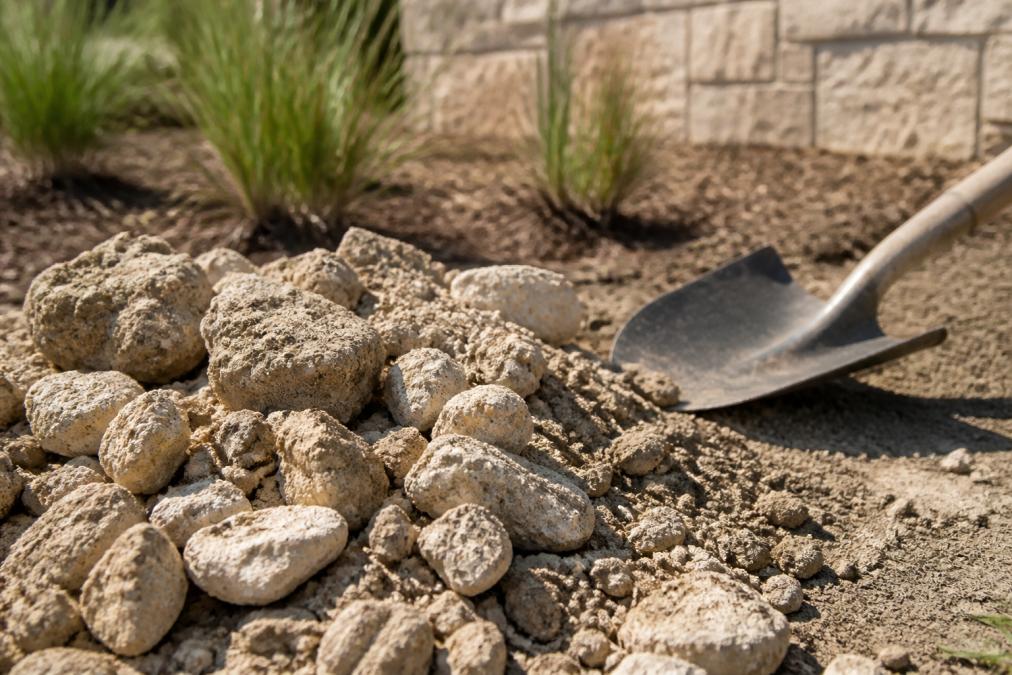
Caliche soil is a hard, calcium carbonate-rich layer that forms beneath the surface in arid and semi-arid regions, creating what's often called hardpan. This dense limestone deposit acts as an impermeable barrier that prevents water from draining properly and stops plant roots from penetrating deep into the soil. If you're working with caliche soil landscaping in the region, you're facing one of the most stubborn obstacles to creating a thriving outdoor space.
Standard planting techniques fail when they hit caliche's alkaline, compacted layer: roots can't establish, water pools or runs off, and nutrients get locked up. The result is stunted plants and frustrated homeowners.
Caliche isn't a death sentence for landscaping, it's a design constraint requiring a different approach that acknowledges the soil's limitations rather than fighting them.
Raised Bed Gardening on Caliche: The Most Practical Solution
Raised beds are the single most effective answer to caliche soil landscaping challenges. This approach bypasses the hardpan entirely by creating a contained growing environment above the problem layer, giving plants the depth and drainage they need to thrive.
Why Raised Beds Work on Hardpan
Raised beds solve three problems: they bypass the caliche layer entirely, provide superior drainage through quality soil, and let you control pH and composition away from alkaline stress.
The depth matters here. A raised bed should be at least 18 inches deep, ideally 24 inches, to give plant roots room to establish themselves without hitting caliche. Shallower beds force roots to stay compressed, limiting plant growth and resilience.
Building and Preparing Your Raised Beds
Use untreated wood, composite, or metal frames sitting directly on the caliche. Line the bottom with hardware cloth if concerned about burrowing pests (optional).
Fill with 40% topsoil, 40% compost, and 20% peat moss or coconut coir for nutrients, moisture retention, and neutral pH. Avoid native soil, which reintroduces caliche problems.
Before planting, water the bed thoroughly to help the soil settle. This takes a few days. Once settled, your raised bed is ready for native plants, vegetables, or ornamentals that would otherwise struggle in pure caliche conditions.
Amending Caliche Soil with Organic Matter
Direct soil amendment improves conditions in specific areas for larger spaces or when committed to native soil. The key is understanding how organic matter works on caliche and measuring progress with soil testing.
How Organic Matter Breaks Down Alkaline Caliche
Organic matter lowers pH through decomposition acids, increases microbial activity that acidifies soil, and improves structure to allow water penetration instead of pooling.
Meaningful pH change takes months to years, but annual amendments produce measurable results.
Soil Testing: The Foundation of Amendment Strategy
Before you start amending, test your soil. This tells you your starting pH, nutrient levels, and organic matter content, information that guides your amendment approach and lets you measure progress.
DIY soil testing: Inexpensive kits ($15-$30) measure pH and basic nutrients. Most caliche soils test pH 7.5-8.5. These kits are quick but lack precision and won't detect micronutrient deficiencies.
Professional soil testing: Labs ($25-$50) measure pH, organic matter, nutrients, and provide amendment recommendations. Request tests for pH, organic matter, calcium, magnesium, and micronutrients to confirm caliche influence.
Amendment Protocol: Depth, Timing, and Ratios
Work 3-4 inches of compost into the top 8-12 inches of soil to create an amended zone above caliche. Don't amend deeper than 12 inches.
Amend in fall or early spring when soil moisture is moderate. Avoid summer when soil is dry and compost won't mix effectively.
Use 40% compost, 40% native soil, and 20% organic material (aged manure, leaf mulch, or peat moss) to improve structure and pH without causing interface problems.
The Long-Term Amendment Schedule
Soil amendment isn't a one-time fix. You'll need to add compost annually, especially in the first three to five years, to maintain improved conditions and continue lowering pH.
Year 1: Initial 3-4 inches worked into top 12 inches; test pH after 3 months. Years 2-3: Add 1-2 inches compost annually; retest pH (expect 0.2-0.5 unit drops). Years 4-5: Continue 1-inch annual applications; reach pH 7.0-7.5 by year 5. Year 5+: Maintain with 0.5-1 inch compost annually.
Choosing the Right Compost
Not all compost is equal. Look for finished compost that's dark, crumbly, and free of large debris or undecomposed material. Avoid fresh manure, which can burn plants and introduce pathogens. Aged manure (at least 6 months old) is acceptable.
Municipal yard waste compost ($30-$50/cubic yard) is reliable and affordable. Mushroom compost is excellent but harder to find ($60-$80/cubic yard). Avoid peat moss as primary amendment, it lacks microbial diversity.
Pairing Amendment with Other Techniques
Amendment works best paired with mulching and native plant selection. This long-term strategy increases water retention, introduces beneficial microorganisms, and lowers pH. It's more labor-intensive than raised beds but less expensive over 5-10 years.
Native Plants for Caliche Soil That Thrive Without Extra Work
Choosing the right plants is non-negotiable when working with caliche. Native plants for caliche soil have evolved to handle alkaline conditions, poor drainage, and nutrient limitations. They're also engineered for your climate and require less ongoing care than plants that are fighting your soil chemistry.
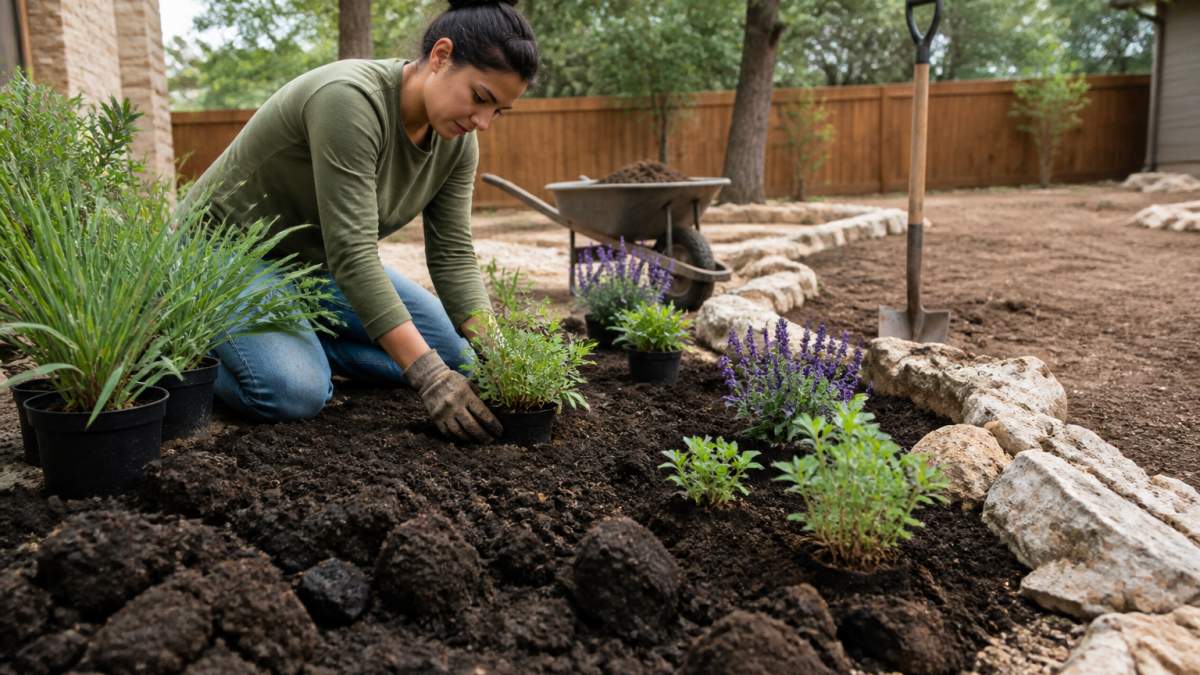
Esperanza, agarito, Texas privet, and mountain laurel thrive in caliche. For ground cover, use native sedums or silver beachweed. These plants prefer alkaline soil, have shallow root systems adapted to hardpan, and are drought-tolerant.
Avoid plants that demand acidic soil or deep root zones. Azaleas, blueberries, and most fruit trees will decline in caliche conditions no matter how much you amend. You're not failing as a landscaper if these plants don't work; you're fighting the environment. Native plants for caliche soil landscaping eliminate that conflict.
Drainage and Irrigation Techniques for Hardpan Conditions
Drip irrigation is superior to overhead watering in caliche areas. Soaker hoses deliver water slowly to roots, minimizing runoff. Channel pooling water through grading or shallow swales.
For standing water, consider French drains if grading and plant selection don't solve it.
Mulch and Moisture Retention Strategies
Apply 2-3 inches of organic mulch (wood chips, bark, or aged compost) around plants, leaving a gap at stems. Mulch moderates temperature, suppresses weeds, retains moisture, and protects soil from compaction.
Breaking Up Caliche: When and How to Do It
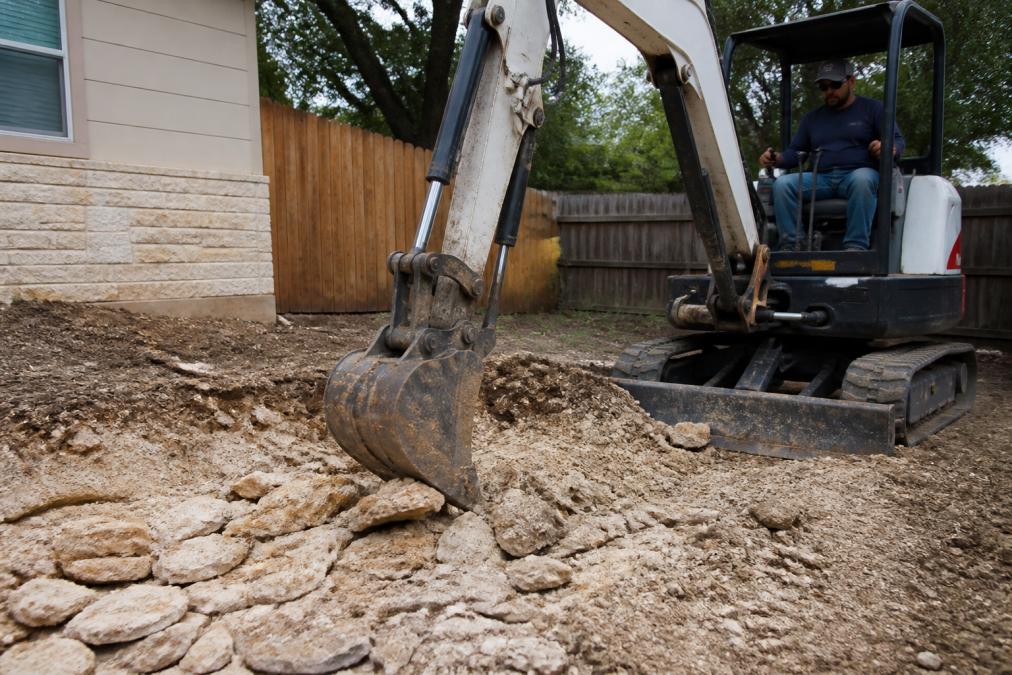
Sometimes you need to break through the caliche layer itself. This is physically demanding work, but it's necessary for larger landscaping projects, tree planting, or when you want to establish deeper root systems. The challenge is deciding whether to attempt it yourself, rent equipment, or hire a professional, a decision that hinges on hardpan depth, project scope, and your budget.
Understanding Caliche Depth and Breakability
Caliche layers typically range 6 inches to 3 feet thick. Layers under 12 inches are breakable with hand tools; deeper than 18 inches requires mechanical excavation. Test density by driving rebar with a sledgehammer, easy penetration indicates softer caliche; minimal scratching indicates dense hardpan requiring heavier equipment.
Equipment Options and Trade-Offs
Hand tools: Under 50 sq ft, <12" deep. Cost <$100, labor 4-8 hrs/100 sq ft. Jackhammer: 50-200 sq ft, 12-18" deep. Rental $40-$80/day; fractures hardpan in 6-10 hours but risks utility damage. Mini excavator: 500-1,000 sq ft/day. Rental $150-$300/day plus delivery; professional standard. Full-size excavator: Over 1,000 sq ft; rental >$300/day.
The Cost-Benefit Analysis: Breaking Caliche vs. Working Around It
Single tree: Hand tools or jackhammer ($50-$150 rental) vs. raised bed ($150-$300 materials) often favors raised beds. 200 sq ft garden: Mini excavator ($500-$1,000 total) vs. raised bed ($400-$800, faster, no rental). 1,000+ sq ft renovation: Breaking caliche ($0.50-$1.00/sq ft) becomes economically justified.
When to Break Caliche vs. When to Work Around It
Break caliche if:
- You're planting deep-rooted trees (oak, pecan, elm) that will struggle in shallow soil
- Your project covers more than 300 square feet and justifies equipment rental
- You're committed to amending the native soil and want to maximize root penetration
- Drainage issues are severe and grading alone won't solve them
Work around caliche (raised beds, native plants, surface amendments) if:
- Your project is under 200 square feet
- You're planting shallow-rooted natives or ornamentals
- Your budget is under $1,000
- You want to avoid the noise, disruption, and utility risks of excavation
Breaking Caliche: The Execution Process
If you decide to proceed, the process is straightforward. Start by marking the area clearly and calling 811 at least two business days before work begins to have underground utilities marked (811 Before You Dig). This is free and legally required in most jurisdictions.
Seasonal Maintenance Calendar for Caliche Landscapes
A structured maintenance routine keeps caliche landscapes healthy year-round. Spring is when you assess winter damage, refresh mulch, and prepare beds for the growing season. Add compost to amended areas and check irrigation systems for leaks or damage.
Frequently Asked Questions
How do I improve caliche soil for planting without replacing it entirely?
The most practical approach is combining raised beds with organic matter amendment. For in-ground planting, add 4-6 inches of compost and topsoil to the surface, then incorporate it into the upper caliche layer through tilling. Mulch heavily to retain moisture and gradually break down the limestone. Native plants and drought-tolerant species adapted to alkaline soil reduce the amendment burden significantly. Raised beds remain the fastest solution if you need results within one season.
Will grass grow in caliche soil?
Standard turf grass struggles in caliche because the hardpan blocks root penetration and water drainage, leading to root rot and poor establishment. Native grasses and drought-tolerant warm-season varieties perform better, but they still require soil preparation. Breaking through or removing the caliche layer, adding quality topsoil, and improving drainage are necessary steps. Xeriscaping alternatives like native ground covers often outperform grass in caliche-heavy areas with less maintenance.
What are the best native plants for caliche soil?
Native plants adapted to alkaline, limestone-rich soil include Texas privet, agarito, esperanza, flame acanthus, rosemary, and native grasses like sideoats grama. These species tolerate high pH levels and calcium carbonate naturally, requiring minimal amendment. Avoid acid-loving plants like azaleas and blueberries. Native plants also demand less water and fertilizer once established, making them ideal for caliche landscapes where drainage and nutrient availability are naturally limited.
What equipment do I need to break up caliche effectively?
For small areas, a mattock or digging bar can penetrate shallow caliche layers. For larger sections, rent a jackhammer, pneumatic breaker, or small excavator from equipment rental companies. A rototiller will not break hardpan effectively. If the caliche layer is thick or deep, professional excavation equipment is more efficient and prevents injury. Always call 811 before digging to mark underground utilities, and wear safety gear including eye and hearing protection.