 how-to
Prevent Fence Warping in Heat: A Texas Guide
Table of Contents
- Why Fences Warp in Extreme Heat and Humidity
- Choosing the Best Wood for Fences in Hot Climates
- How to Seal a Fence to Prevent Warping
- Installation Techniques That Reduce Warping
- Manage Soil Moisture and Drainage Around Posts
- Fence Maintenance Schedule for Summer
- Common Mistakes to Avoid
- Frequently Asked Questions
Last Updated: September 23, 2026
Why Fences Warp in Extreme Heat and Humidity
Wood fence warping happens when moisture and heat work against each other. Your fence absorbs water from rain and humidity, then the Texas sun dries it out fast. This constant cycle causes the wood to expand and contract. Over time, this stress twists and bends the boards.
The problem gets worse in our climate. Texas humidity stays high most of the year. Summer temperatures spike above 95°F regularly. This combination is brutal on wood. Clay soil holds water longer, keeping moisture near your fence posts. When you add intense UV rays, the wood surface dries while the interior stays wet. That's when real warping starts.
Homeowners install a fence, and within two or three seasons, boards start cupping or twisting. The grain of the wood lifts on one side. Nails pop out. Gaps form between boards. It's not a defect in most cases, it's physics.
The good news: you can prevent fence warping with the right approach. Choose the right wood species. Install it correctly. Seal it properly. Manage drainage around the posts. These steps work together to keep your fence straight and strong for years.
Choosing the Best Wood for Fences in Hot Climates
Not all wood handles Texas heat equally. Some species resist warping far better than others. The grain structure, density, and natural oils in the wood matter more than you might think.
Pressure-Treated Pine vs. Cedar and Redwood
Pressure-treated pine is affordable and readily available. It's been chemically treated to resist rot and insects. But pine has a loose grain structure. It absorbs and releases moisture quickly, which makes warping more likely. Pine is your budget option, not your best option for preventing fence warping in Texas heat.
Cedar is much better. It has natural oils that repel water and insects. Cedar is less dense than some woods, but its grain is tighter than pine. This means it warps less. Cedar also looks attractive as it ages. The downside: cedar costs more than treated pine, and it still needs sealing to protect against UV damage.
Redwood performs similarly to cedar. It's naturally rot-resistant and has a beautiful grain. Redwood is slightly denser than cedar, which helps it resist warping. Like cedar, redwood needs regular sealing. Both cedar and redwood are premium choices for fences that need to last in hot climates.
For preventing fence warping in Texas heat, cedar and redwood outperform treated pine. The extra cost buys you years of stability and fewer repairs.
Grain Orientation and Thermal Expansion
Here's what most guides miss: the direction of the grain matters as much as the wood species itself.
Wood expands and contracts differently along the grain versus across it. This is called thermal expansion. When boards are cut with grain running vertically, they tend to cup (curve across the width). When grain runs more horizontally, the board stays flatter under heat stress.
Ask your supplier or installer about grain orientation. Boards with vertical grain (also called edge-grain or quarter-sawn) resist warping better than flat-grain boards. They cost a bit more, but they're worth it in Texas. The grain pattern you see on the board's face tells you which way it was cut.
Temperature swings also cause expansion. A board that's 90°F in the morning might hit 140°F by afternoon in direct sun. That's a 50-degree swing. Over a full season, this repeated stress adds up. Proper spacing between boards (discussed below) gives the wood room to expand without forcing boards to bend.
How to Seal a Fence to Prevent Warping
Sealing is where most people fall short. They build the fence and think they're done. Sealing is actually the most important step for preventing fence warping in Texas heat.
A good sealant blocks UV rays and water. It keeps the wood's moisture content stable. Without sealing, the surface dries while the interior stays wet. That imbalance causes warping. With sealing, moisture stays more consistent throughout the board.
UV-Resistant Stains vs. Eco-Friendly Sealants
Stains with UV blockers are the traditional choice. They contain pigments that reflect UV light and resins that seal the wood. A quality stain lasts 2-3 years in Texas sun before needing reapplication. Stains come in solid colors or semi-transparent finishes. Solid stains hide the grain but offer maximum UV protection.
Eco-friendly sealants are water-based or low-VOC (volatile organic compound) products. They're better for the environment and your health during application. Some eco-friendly options perform well, but not all. The problem: many eco-friendly sealants don't last as long as traditional stains. They may need reapplication every 1-2 years instead of 2-3 years.
If you choose eco-friendly, pick one rated for exterior wood in hot climates. Check the label for UV protection claims. Some eco-friendly products now match traditional stain performance, but you'll pay more for quality.
For most Texas homeowners, a traditional stain with UV blockers is the practical choice. It lasts longer between coats and costs less over time.
Timing and Application Best Practices
Apply sealant in spring or early fall, not summer. Hot temperatures make the sealant dry too fast, leaving thin spots. Cool temperatures let it cure properly. Spring application gives your fence protection before summer heat arrives. Fall application prepares it for winter moisture.
Never seal a wet fence. Wait at least two weeks after installation before sealing. Let the wood dry out. If you seal over damp wood, the sealant won't bond properly. It'll peel and flake within months.
Apply two coats. One coat is not enough. Two coats build a thicker barrier against UV and water. Let the first coat dry completely (usually 24-48 hours) before applying the second.
Reapply every 2-3 years. This is the maintenance part most people skip. UV rays break down sealant over time. Water starts penetrating again. Your fence starts warping. Set a calendar reminder to check your fence every spring. If the sealant looks faded or water beads aren't forming on the surface, it's time to reseal.
| Sealant Type | Reapplication Interval | UV Protection | Environmental Impact |
|---|---|---|---|
| Traditional stain | 2-3 years | High | Standard VOC |
| Eco-friendly sealant | 1-2 years | Medium to High | Low VOC |
| Clear sealant | 1-2 years | Low | Varies |
| Solid color stain | 2-3 years | High | Standard VOC |
Installation Techniques That Reduce Warping
How you install the fence matters as much as the materials you choose. Poor installation almost guarantees warping problems. Good installation prevents them.
Board Spacing and Airflow Requirements
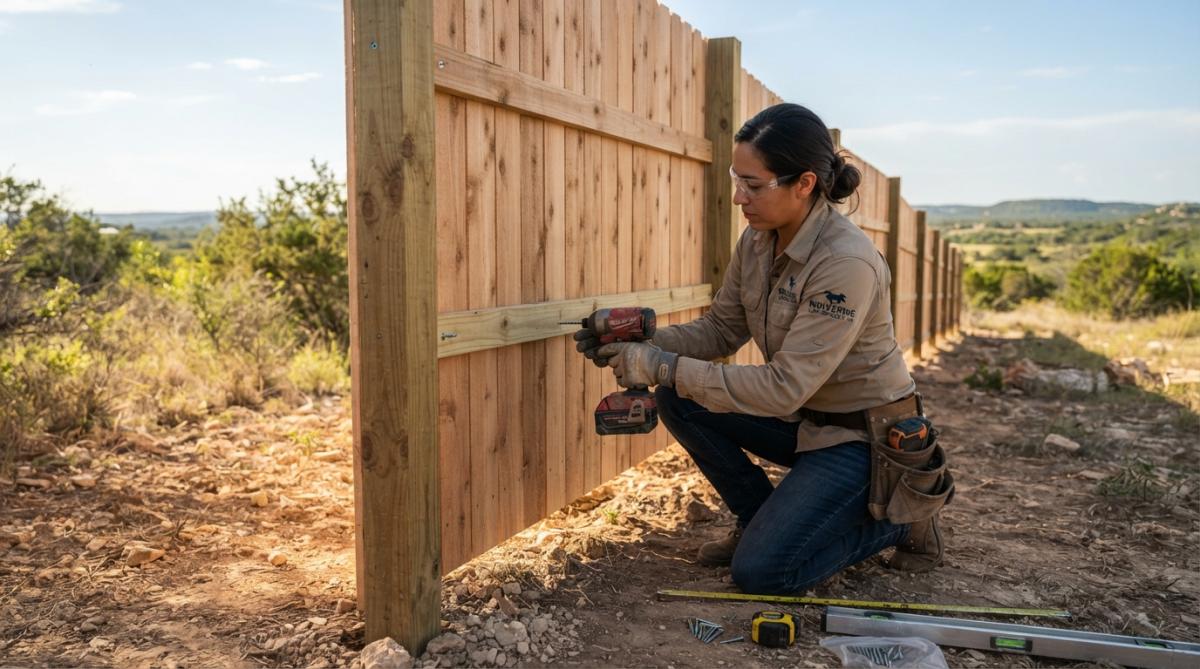
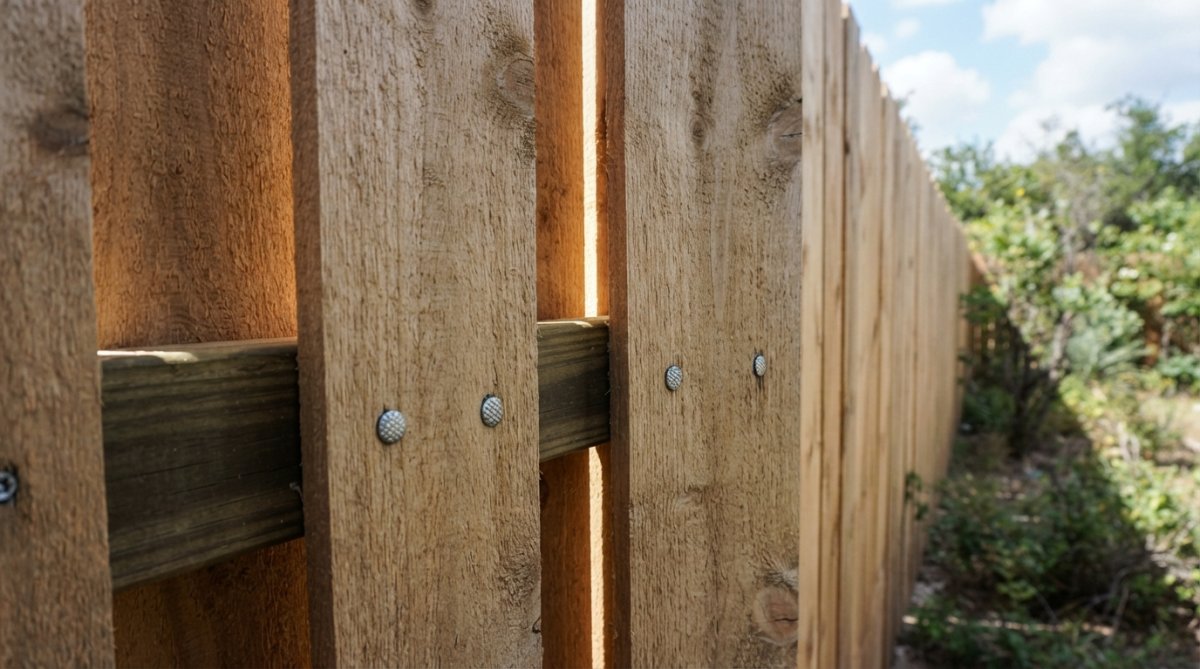
Leave space between boards. This is critical. Boards need room to expand without forcing neighbors to bend. A gap of 1/4 inch to 1/2 inch between boards is standard. In Texas heat, lean toward the larger gap. The wood will expand, and that gap prevents buckling.
Airflow around the fence matters. Wind flowing through gaps helps dry the wood evenly. This reduces moisture imbalance that causes warping. If you prefer a solid privacy fence with no gaps, space the boards slightly loose on the rails. This lets air circulate behind the fence while keeping it visually solid.
Vertical board orientation is better than horizontal. Vertical boards handle thermal expansion better. Horizontal boards tend to cup more easily. If you want horizontal boards for aesthetics, space them even farther apart to allow for expansion.
Hardware and Fastener Selection
Use galvanized or ring-shank nails. Regular nails rust and lose holding power. Galvanized nails resist corrosion in humid climates. Ring-shank nails have barbs that grip the wood better. They won't pop out as the wood moves.
Avoid screws in direct sun exposure. Screws can loosen over time as wood expands and contracts. Nails flex slightly with the wood movement. Screws are better for attaching rails to posts, but use nails for boards.
Use stainless steel hardware. Posts, brackets, and hinges should be stainless steel or galvanized. Regular steel rusts quickly in Texas humidity. Rust stains and weakened hardware follow.
Manage Soil Moisture and Drainage Around Posts
Your fence posts sit in the ground where moisture collects. Clay soil holds water. That moisture wicks up into the wood, causing rot and warping at the base.
Improve drainage around posts. Dig a small trench around the post area. Slope it away from the post. This helps water run off instead of pooling.
Fence Maintenance Schedule for Summer
Summer is when fence warping happens fastest. Heat and humidity stress the wood constantly. A maintenance schedule keeps problems small.
Common Mistakes to Avoid
Mistake 1: Choosing treated pine for longevity. Treated pine is cheap, but it warps more than cedar or redwood. You'll spend money on repairs that a better wood choice would have prevented. The savings disappear quickly.
Frequently Asked Questions
How do I prevent fence warping in extreme heat?
Prevent fence warping by selecting moisture-resistant wood species like cedar or redwood, installing boards with proper spacing for airflow, sealing with UV-resistant stain or sealant, and maintaining consistent drainage around fence posts. Proper board orientation and galvanized fasteners also reduce movement. Regular maintenance, including resealing every 2-3 years, keeps wood protected from thermal expansion and moisture absorption that causes warping.
What's the best wood for fences in hot climates?
Cedar and redwood naturally resist warping better than pressure-treated pine because they contain oils that repel moisture and UV damage. Pressure-treated pine is more affordable but requires more frequent sealing.
How often should I seal my fence in summer?
Seal your fence every 2-3 years in hot climates, with the first coat applied before installation or within the first season. In summer, avoid resealing during the hottest months (June-August) when heat can prevent proper curing. Inspect your fence monthly during summer for signs of drying or cracking. If water beads up on the wood, sealing is still effective; if it soaks in, resealing is due. High-UV areas may need more frequent maintenance.
Does fence orientation affect warping in hot climates?
Yes. Fences facing south or west receive more direct sun exposure, causing greater thermal expansion and UV damage. North-facing fences stay cooler and experience less warping. If your fence runs east-west, the south-facing side will weather faster and may warp differently than the north side. Consider this when planning maintenance schedules and selecting sealant types, south-facing sections may need more frequent resealing and closer monitoring.