 ultimate-guide
Why Landscaping Projects Fail in Texas: 7 Critical Mistakes
Table of Contents
- Why Landscaping Projects Fail: The Root Causes
- Soil Problems and Site Preparation Failures
- Landscape Irrigation Best Practices: What Goes Wrong
- Plant Selection and Drought-Resistant Landscape Design
- Hardscape and Material Failure Under Extreme Heat
- Post-Installation Maintenance and Neglect
- Hiring Professional Landscaping Services: Getting It Right
- Frequently Asked Questions
Last Updated: September 21, 2026
Landscaping projects fail in Texas for predictable reasons, the same mistakes repeat across residential and commercial properties. Understanding what goes wrong is the difference between a landscape that thrives for decades and one that fails within a few seasons.
Poor site preparation, wrong plant selections, irrigation failures, material choices that can't handle the heat, and post-installation neglect destroy more landscapes than any single factor. This guide breaks down each mistake and how to avoid it.
Why Landscaping Projects Fail: The Root Causes
Landscaping projects fail because teams skip foundational work, focusing on aesthetics while overlooking engineering. A beautiful design fails if soil won't support it, water doesn't drain, or materials warp under Texas heat.
The biggest reason landscaping projects fail is inadequate site analysis. Contractors assess visually without testing soil pH, checking for expansive clay, mapping drainage, or evaluating microclimates. A gentle slope may have pooling problems; shaded areas stay wet for weeks; full-sun zones bake at 120 degrees. Each zone demands different solutions.
Misaligned expectations between homeowners and contractors cause failure. Clients want instant curb appeal; contractors want to finish fast. Neither discusses what success looks like in year two, five, or ten. A landscape that looks great on day one but requires constant rescue operations isn't successful.
Soil Problems and Site Preparation Failures
Soil is where landscaping projects fail most visibly. Expansive clay swells when wet and shrinks when dry, cracking hardscape and destabilizing roots. Limestone and caliche layers block drainage and root penetration. pH levels vary dramatically, making plant selection treacherous.
Most contractors plant directly into native soil without testing or amendment. The fix requires soil testing and amendment before installation.
Soil testing should measure pH, texture, compaction, drainage rate, and caliche or limestone presence. A percolation test shows whether water drains in hours or days.
Soil amendment depends on what you're growing. Native plants need less amendment than ornamentals. Compost, sand, or sulfur change soil chemistry, but amendment only works if drainage is solved first.
The most common mistake is amending soil without addressing compaction. Heavy equipment compacts soil to concrete-like density, preventing root penetration and drainage. Proper site preparation includes decompaction, drainage design, then amendment.
Landscape Irrigation Best Practices: What Goes Wrong
Irrigation systems fail because they're designed without understanding the property's water needs. A system that works for one yard fails on another due to slope, soil type, sun exposure, and plant selection.
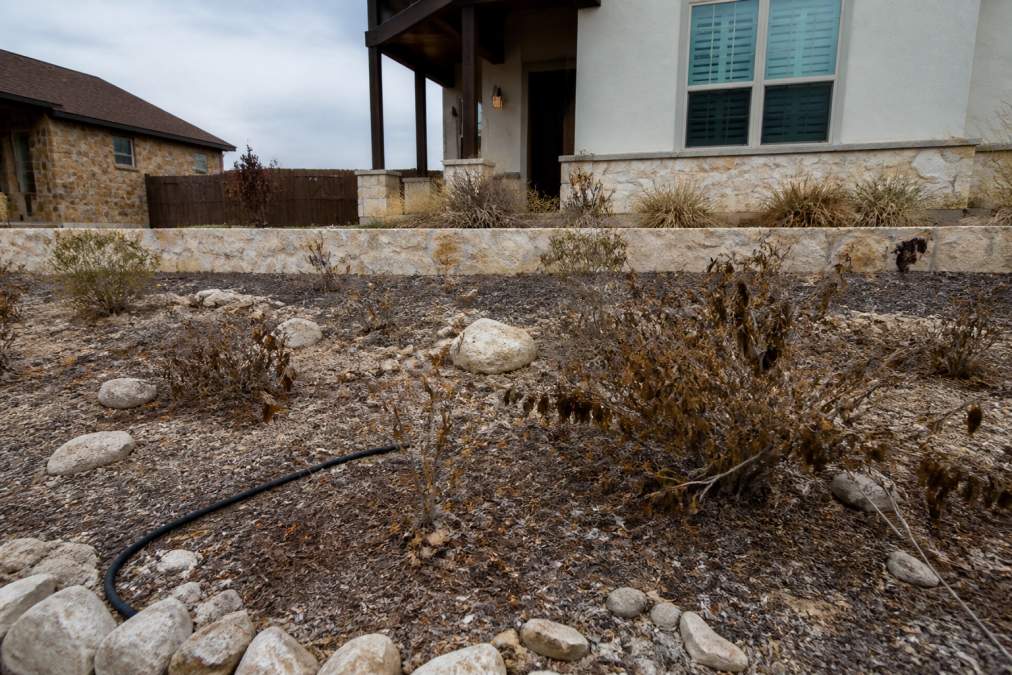
Most irrigation failures happen in design. Contractors install uniform systems across properties with different conditions. A mixed-shade zone gets the same schedule as full sun. Clay soil gets the same watering as sandy soil. Result: overwatering, underwatering, root rot, and drought stress.
Proper irrigation design requires hydro-zoning: group plants with similar water needs, run separate zones for shade/sun/slopes/flat ground, and adjust schedules seasonally.
Poor system installation causes failure: heads don't cover evenly, pipes freeze or crack, timers aren't adjusted seasonally, and spring settings persist into summer when demand triples.
Water-smart practices prevent failure: mulching reduces evaporation, drip irrigation targets roots, soil moisture sensors prevent overwatering, and smart controllers adjust for weather.
Plant Selection and Drought-Resistant Landscape Design
Plant selection determines survival. Most projects start with aesthetics and ignore whether plants can grow in the specific location.
The biggest mistake is installing non-native plants without understanding their needs. Native plants adapted to Texas heat, irregular rainfall, and poor soil thrive with minimal intervention.
Drought-resistant design means selecting plants suited to your ecoregion and microclimate. The Hill Country has different natives than South Texas. North-facing slopes need different plants than south-facing slopes.
Microclimates matter: a protected area near a building supports plants that die in open sun 20 feet away; low spots support moisture-lovers; ridges need tougher varieties.
Create a site-specific plant palette: start with native plants, add non-natives only where they solve design problems and handle local conditions, verify water needs match irrigation zones, and align shade/sun with requirements.
Hardscape and Material Failure Under Extreme Heat
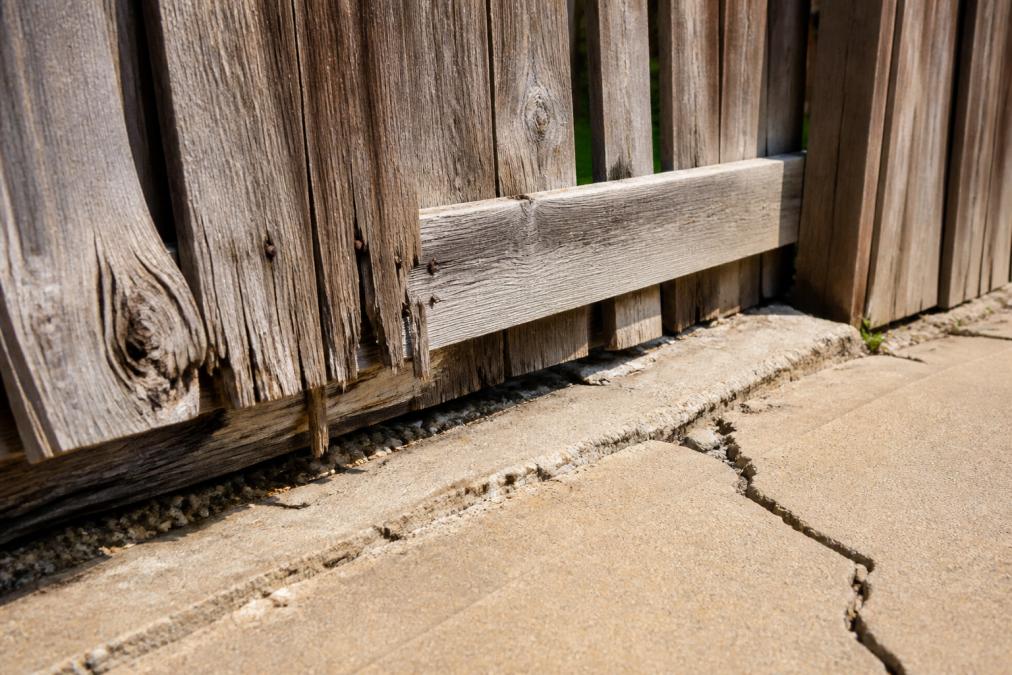
Hardscape fails in Texas primarily due to expansive clay soil, a geotechnical problem most homeowners and contractors don't fully understand.
Expansive Clay Soil and Concrete Failure
Expansive clay soils contain minerals that absorb water and swell, then shrink dramatically. A single wet-dry cycle causes 5-10% volume change. Concrete, pavers, and retaining walls placed on this soil without preparation fail predictably and expensively.
Swelling soil pushes concrete upward unevenly (heaving). When soil shrinks, concrete drops, cracks, and water infiltrates. Paver patios shift and separate, creating trip hazards and weed invasion.
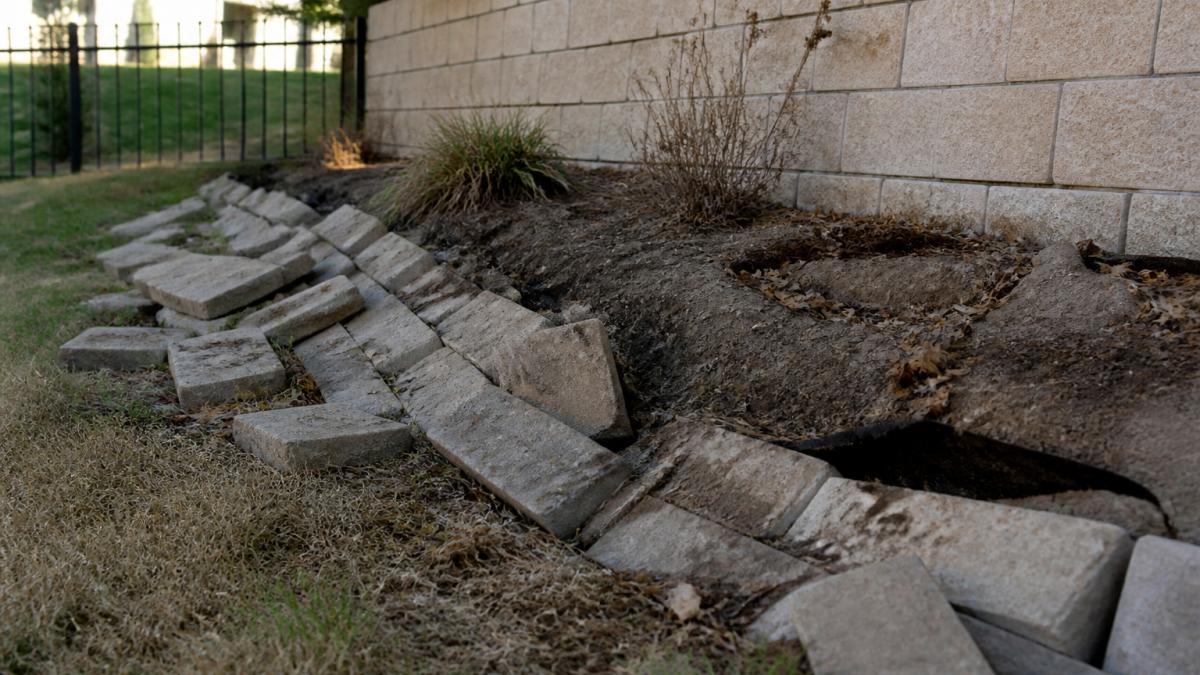
Retaining walls fail as swelling soil pushes outward, cracking mortar. Shrinking soil creates gaps where water accumulates and freezes, adding pressure. Walls without proper drainage fail within 3-5 years.
Solutions require: (1) soil stabilization with lime/cement or replacement with engineered fill, (2) moisture control through grading and drainage design, and (3) perimeter drains, gravel bases, and proper slope.
Material-Specific Failures
Wood hardscape fails as moisture causes swelling, then uneven shrinkage in sun creates stress and splits. Untreated wood decays; treated lumber warps and cracks with poor drainage or wet soil contact.
Concrete also fails from freeze-thaw cycling: water enters cracks, expands during freezes, widening cracks and causing spalling. De-icing salts accelerate deterioration.
Stone and masonry fail when water gets behind the material. Winter freezing expands water, pushing stone outward and cracking mortar. Efflorescence signals water movement. Proper drainage requires perimeter drains, moisture barriers, and weep holes.
Aluminum fencing requires stainless fasteners, expansion joints for thermal movement, and proper cleaning/priming before coating to prevent failure.
Prevention Through Design and Material Selection
The fix is not simply choosing "better" materials, it's engineering hardscape to withstand the specific soil and climate conditions of your property. This means:
- Soil testing and analysis before any hardscape is installed. Determine whether expansive clay is present and how much movement is likely.
- Proper base preparation: excavate poor soil or stabilize it, compact engineered fill, and install a gravel base that allows water drainage.
- Drainage design: slope hardscape away from structures, install perimeter drains, and use permeable bases where possible.
- Material selection based on local conditions: concrete is appropriate for some applications but not ideal on highly expansive soils; permeable pavers or decomposed granite may be better choices. Wood should be pressure-treated or naturally rot-resistant (cedar, redwood) and kept away from direct soil contact.
- Proper installation techniques: concrete should be reinforced with rebar or wire mesh, installed with control joints every 4-6 feet to allow for movement, and sealed to prevent water infiltration. Masonry should include weep holes, a moisture barrier, and proper mortar composition.
- Maintenance: seal concrete and stone annually, clean gutters and downspouts to prevent water from pooling near hardscape, and address cracks immediately before water infiltrates.
Hardscape failure in Texas is not inevitable. It results from skipping the engineering phase and treating installation as a purely aesthetic exercise. Properties with properly analyzed soil, engineered drainage, and material selection appropriate to local conditions have hardscape that lasts 20+ years without major failure.
Post-Installation Maintenance and Neglect
The biggest reason landscaping projects fail happens after installation. Perfect landscapes collapse within 2-3 years without maintenance. Most homeowners receive no maintenance plan or schedule.
Why Maintenance Neglect Causes Cascade Failures
Maintenance is structural, not cosmetic. Each task prevents specific failure modes:
Irrigation system adjustment prevents overwatering and underwatering. Spring systems calibrated for spring rainfall fail in summer when demand triples. Texas systems need adjustment four times yearly: spring (increase), early summer (peak), fall (reduce), winter (minimal).
Mulch replenishment prevents temperature extremes and water loss. Mulch loses 25-50% annually; bare soil reaches 140+ degrees in summer, cooking roots.
Seasonal Maintenance Failures in Texas
Texas's climate creates specific maintenance windows and failure modes:
Spring (March-May): Critical establishment period. Maintain consistent moisture, remove winter damage, refresh mulch, and remove weeds before they compete. Failure means plants enter summer stressed.
Creating and Following a Maintenance Plan
A maintenance plan created at installation is essential. Document irrigation zones and schedules, pruning requirements, mulch/soil care, pest monitoring, and seasonal tasks. Provide in writing. Professional service for year one and regular inspections catch problems early.
Hiring Professional Landscaping Services: Getting It Right
Choosing the right contractor makes the difference between a landscape that lasts and one that fails. Most homeowners don't know what to look for. They compare prices and choose the lowest bid. That's the fastest way to guarantee failure.
| Common Failure | Root Cause | Prevention |
|---|---|---|
| Plant death or struggle | Wrong plant for location or poor soil | Site analysis, native plant selection, soil testing |
| Drainage problems | Poor grading or hardscape placement | Drainage design, proper grading, water management |
| Hardscape cracking | Expansive soil or poor installation | Soil preparation, proper drainage, quality materials |
| Irrigation failure | Uniform design across different zones | Hydro-zoning, seasonal adjustment, soil testing |
| Rapid deterioration | Material selection ignoring climate | Heat-rated materials, proper installation, maintenance |
| Landscape collapse | Lack of maintenance plan | Written schedule, regular inspections, professional service |
Frequently Asked Questions
What are the most common reasons landscaping projects fail in Texas?
The biggest failures stem from four areas: poor soil preparation (especially with expansive clay and caliche), inadequate or wrongly designed irrigation systems, selecting plants unsuited to local heat and drought, and neglecting maintenance after installation. Texas heat and humidity accelerate material degradation, and many projects underestimate the climate's severity. Proper site analysis and professional installation catch these issues before they become costly problems.
How does hiring professional landscaping services prevent project failure?
Professional landscapers understand local ecoregion conditions, soil mechanics, and water-smart practices specific to the region. They conduct proper site analysis, design drainage systems that work with expansive soils, select plants with appropriate hardiness zones, and establish maintenance schedules that keep landscapes healthy. They also manage unexpected issues during installation rather than abandoning the project when problems arise.
Why is irrigation design so critical for landscape survival?
Poor irrigation is one of the leading causes of landscape failure. Overwatering causes root rot in clay soils; underwatering stresses plants in extreme heat. Efficient irrigation systems are designed for the specific soil type, plant placement, and seasonal rainfall patterns. Hydro-zoning, grouping plants by water needs, ensures each area gets appropriate moisture without waste. Without proper irrigation design and maintenance, even drought-tolerant plants fail.
What soil issues cause landscaping projects to fail?
Expansive clay soil and caliche layers are common culprits. These soils shrink and swell with moisture changes, cracking hardscapes and destabilizing plants. Proper soil amendment and drainage solutions address these issues, but skipping site analysis and soil preparation guarantees failure. Amending soil pH and adding organic matter improves plant establishment and long-term landscape sustainability.